

As new technologies emerge, business executives are keen to learn how these tools can assist their organization and generate revenue, and technology leadership finds themselves in the forefront as they constantly evaluate and implement new solutions to meet business expectations. There is no difference this year as tools such as Generative AI bring new initiatives to the table.
Foundry’s 23rd annual State of the CIO research details how the role of the CIO continues to evolve and elevate in today’s business climate and defines the CIO agenda for 2024. This definitive benchmarking survey outlines the business and technology initiatives IT leaders expect to focus on in the coming year and where they expect to be more involved.
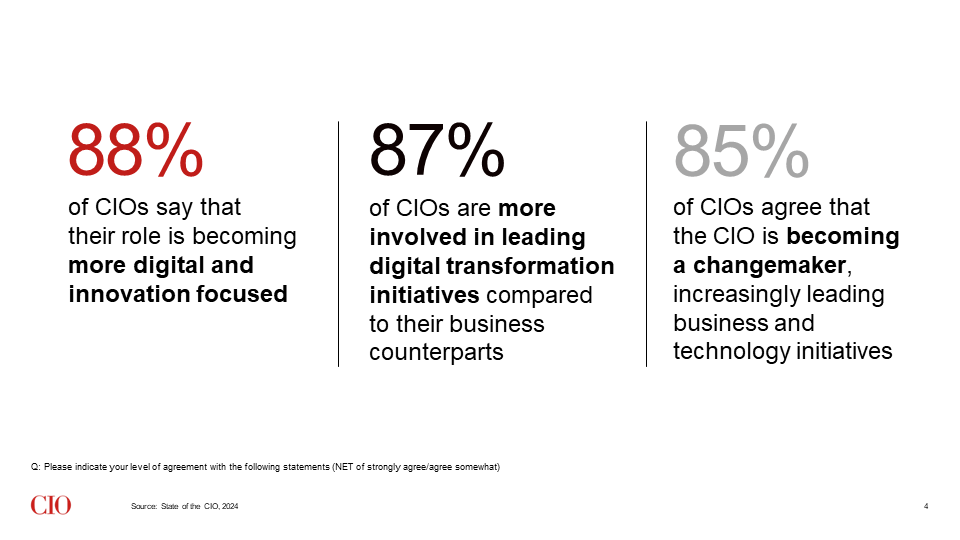
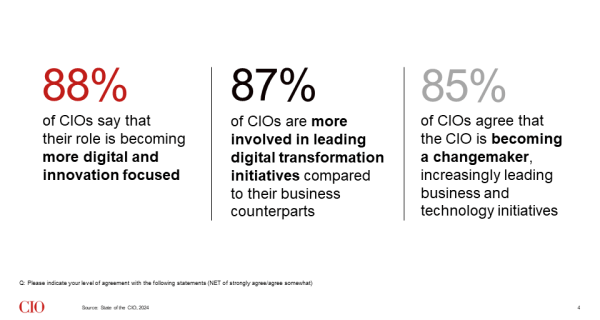
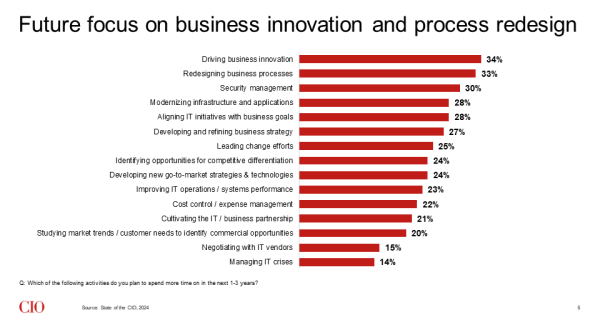
Like in past years, we consistently see the CIO increasingly leading business and technology initiatives (85%) while also planning to have more time for strategic tasks in the future. Much of their time is currently spent on security management and improving IT operations, however their hope is to focus more on driving business innovation and redesigning business processes in the next 1-3 years. AI is also a new focus in this year’s research and the data found that 71% of CIOs agree that they’re working more closely with line of business on AI applications.
Key takeaways:
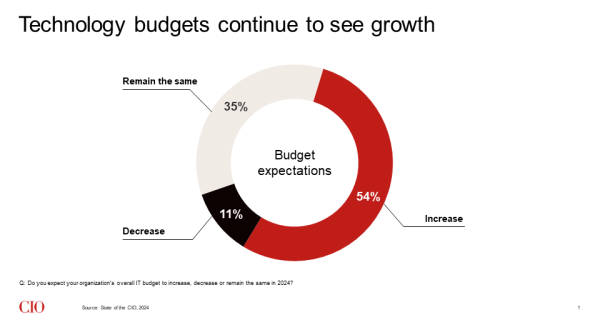
- The CIO role continues to be elevated after last year when economic conditions put a new level of pressure on heads of IT. These individuals remain optimistic about tech budget growth and also anticipate technology budgets that live outside of IT to switch ownership to IT.
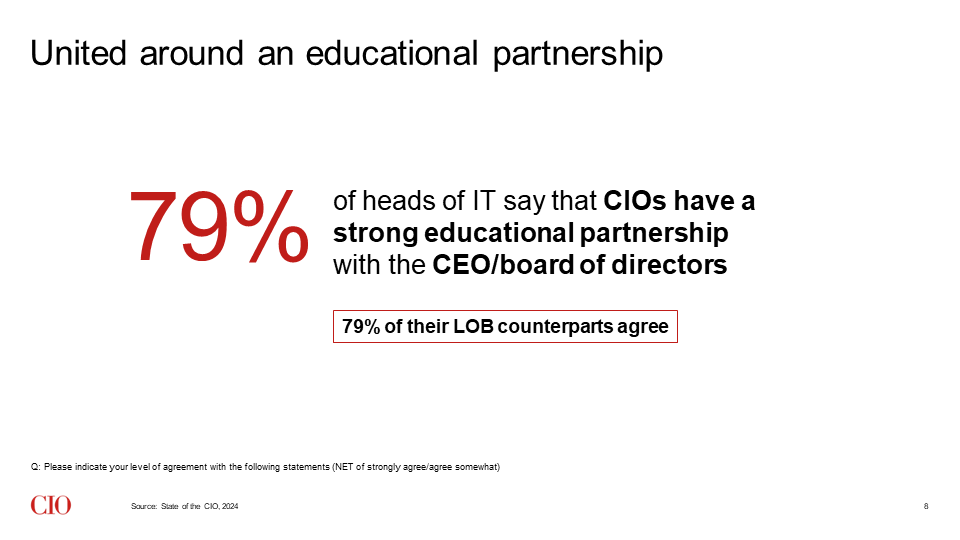
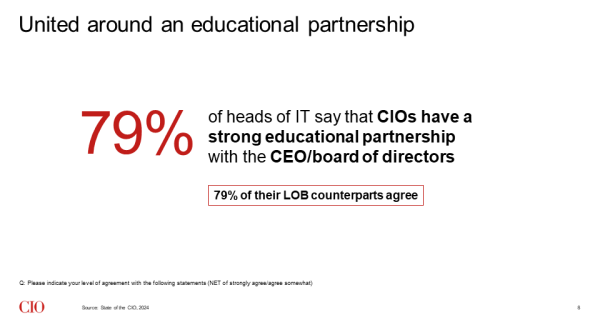
- CIOs have a strong educational partnership with the CEO/board of directors. In fact, 66% of line of business view the CIO as a consultant or strategic advisor, and 63% of CIOs plan to work more closely with LOB when determining the business need this year.
- Throughout the upcoming year, CIOs will focus their time and expertise on security management, followed by improving IT operations/systems performance, and aligning IT initiatives with business goals. However, thinking three years from now, CIOs hope to focus on driving business innovation and redesigning business processes.
- CIOs continue to strive towards a business strategist role, and report to be spending more time aligning IT initiatives with business goals and redesigning business processes compared to last year.
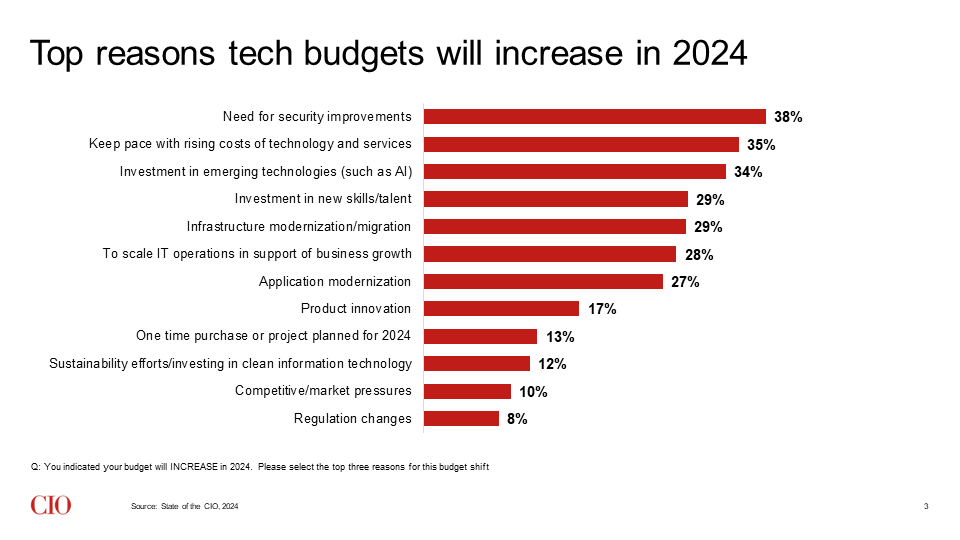
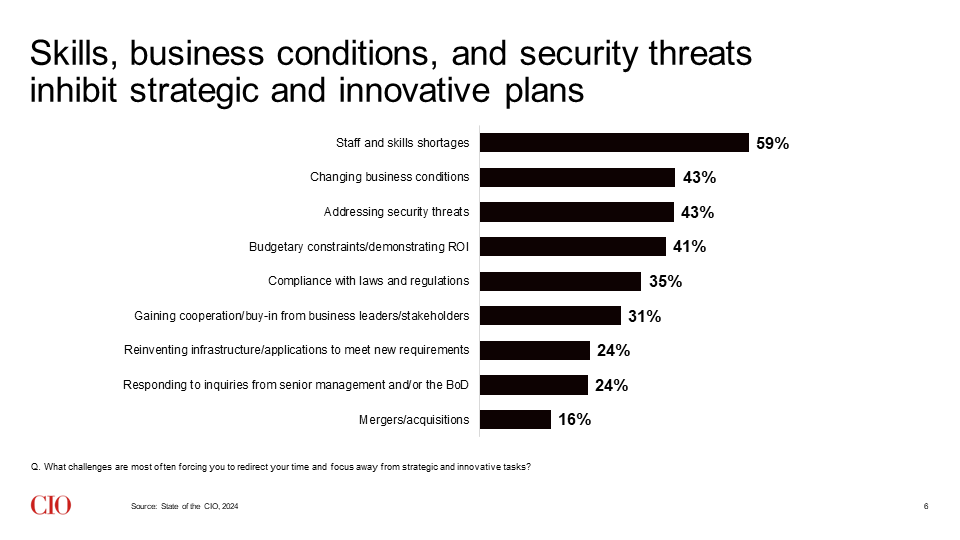
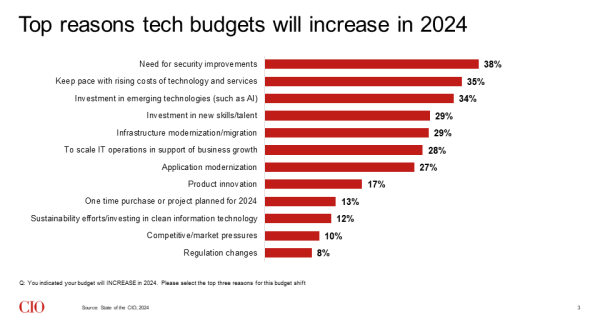
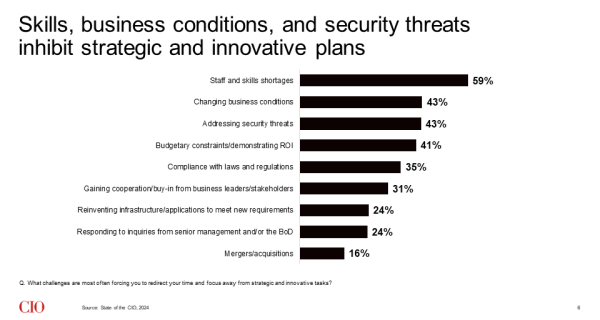
- Security continues to consume much of tech leaderships’ time. The need for security improvements is the #1 reason for tech budgets increasing in 2024 and 43% say that addressing security threats is most often forcing them to redirect their time and focus away from strategic and innovative tasks.
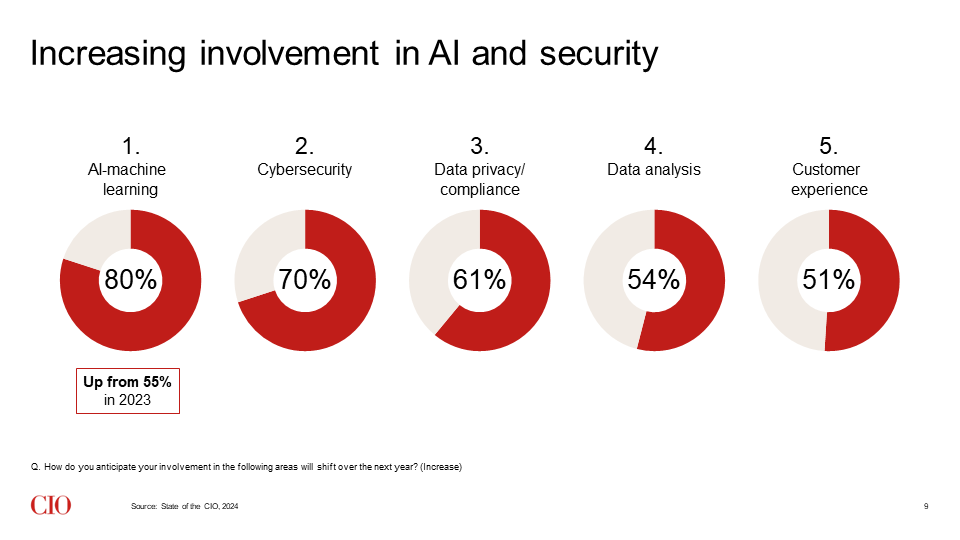
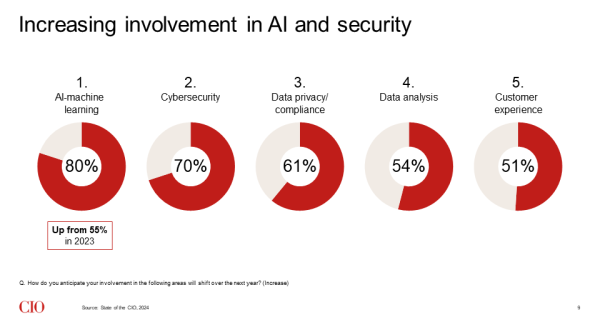
- Due to its perceived automation and efficiency benefits, AI is constantly being explored and implemented. 80% of CIOs anticipate their involvement in AI/machine learning will increase over the next year, which is up from 55% in 2023.
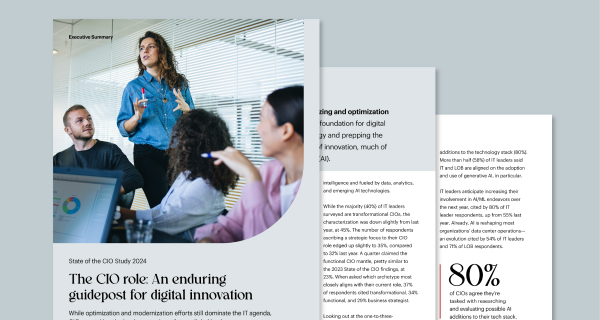
View the sample slides below for further insights on the State of the CIO research:




Executive summary

Our research shows that the CIO role is constantly evolving to keep pace with business needs. We also know that not all organizations are the same. This 2024 research report dives deep into the CIO role and outlines differences by industry, company size, region and more. Explore the data in charts and key stats here.
Regional insights

Who is the North American CIO? View this infographic.

Marketing to EMEA CIOs? View this infographic.

What’s on the APAC CIO’s agenda? Find out in this infographic.
About the research
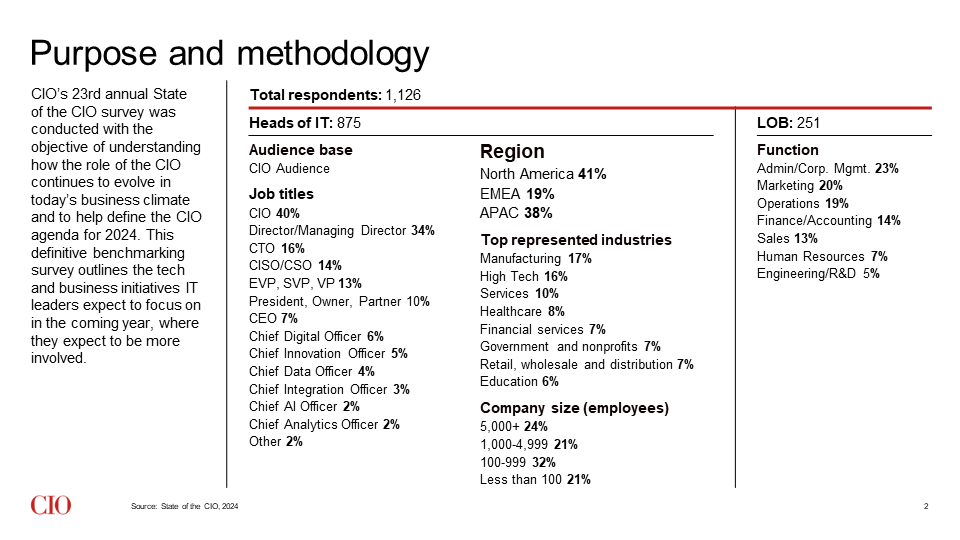
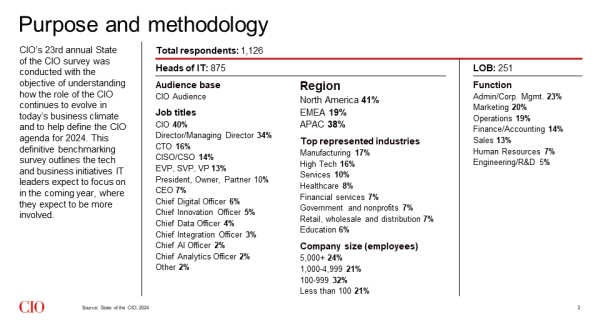
Foundry’s 23rd annual State of the CIO survey was fielded online with the objective of understanding the current parameters of the CIO role and how it may be changing over time. To be considered qualified, respondents must have identified themselves as the head of IT for their company or a division within it. Results are based on 875 qualified IT respondents, and 251 LOB responses. This study was fielded globally, with the response base being 41% North America, 19% EMEA, and 38% APAC.
Better understand the CIO audience
Explore how to sell to the CIO
It’s not always easy to sell technology. Here’s a guide for tech marketers to best understand who the CIO is, what they are focused on, and how to engage with them throughout the purchase process. View Foundry’s Selling to the CIO page.
Listen to what CIOs have to say
Each year, our study outlines how the CIO role continues to evolve in today’s business climate, and explores their business and tech initiatives as they navigate the impact of the current economic climate. See what they think this year.
How to market to CIOs around the world
Is your marketing scope region-specific? If so, it’s important to tailor your messaging – their priorities, responsibilities, and challenges may be very different in North America, EMEA or APAC. Check out these research findings.