

Technology buyers are not short on information. They’re drowning in it. The volume of material available to IT decision-makers has never been higher. Yet paradoxically, finding content that is clear and credible, remains a persistent challenge.
According to Foundry’s Customer Engagement research, 81% say it’s difficult to find high-quality content from vendors when evaluating major technology solutions. The problem isn’t access. It’s noise. In an environment defined by content overload, marketing hype, and growing skepticism, engagement now hinges on something far more fundamental: value, trust, and clarity.
2026 Customer Engagement Study
Here are eight research-backed strategies tech marketers can use to connect more effectively with today’s tech buyers.
1. Focus on organizing the experience
Buyers rarely rely on a single piece of content. They move across formats and channels as they research solutions, making structure increasingly important. A striking 76% of IT decision-makers say they’re more likely to engage with multiple pieces of content when those assets are presented as part of an organized experience.
Disconnected white papers, blogs, and videos create friction. Structured journeys create momentum. Organization has become a competitive advantage.
Luckily, designed for dynamic storytelling, Foundry’s BrandPage solution allows audiences to engage with your brand in an immersive and interactive experience. Click here to learn more!
2. Stop fearing the registration form
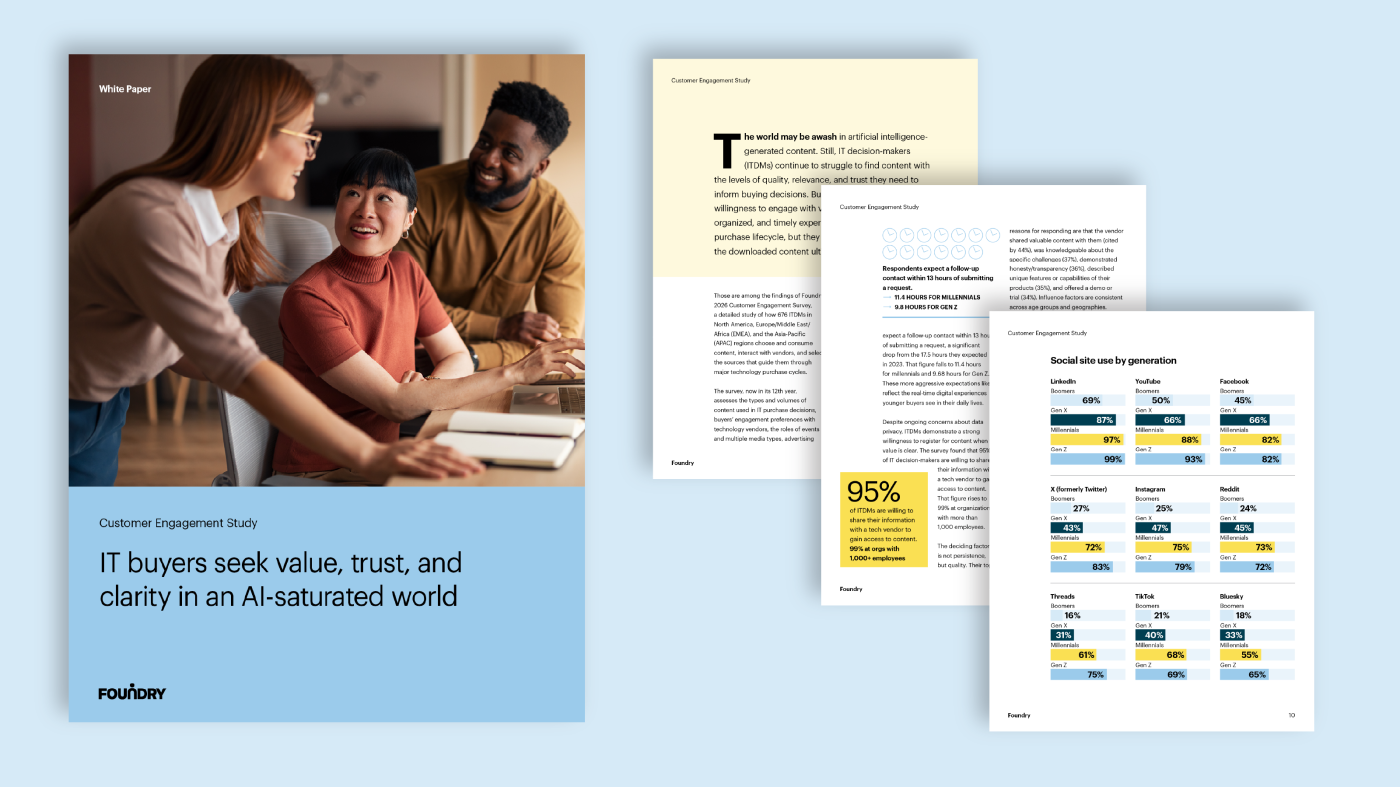
The myth that buyers refuse to share information simply doesn’t hold up. An overwhelming 95% of IT decision-makers are willing to exchange their contact details for valuable content. At large organizations, that figure climbs even higher. The deciding factor is not the form. It’s the perceived payoff.
Buyers most readily register for:
- Product demos
- Product testing and reviews
- Technology news articles
- Third-party research
These preferences suggest buyers are actively seeking materials that help them evaluate, validate, and contextualize decisions rather than simply learn about vendor capabilities.
3. Treat follow-up speed as part of the experience
Buyer patience continues to shrink. Today’s acceptable follow-up window averages just 13 hours, with younger buyers expecting even faster responses.
This shift reframes follow-up from a purely operational metric to an experience metric. Timely responses reinforce credibility, while delayed engagement can subtly erode trust before meaningful conversations even begin.
4. Create content that travels inside organizations
Peer influence remains one of the most powerful forces in enterprise buying decisions.
Buyers are far more likely to share vendor content when:
- They’ve had a strong customer experience
- The vendor provides practical “how-to” guidance
- The information is timely and relevant
Useful content becomes internal currency.
5. Make outreach feel informed, not generic
Buyers are not disengaged. They’re selective.
Engagement increases when vendors:
- Share genuinely valuable information
- Demonstrate understanding of business challenges
- Communicate with honesty and transparency
Aggressive sales tactics erode trust. Relevance builds it.
6. Recognize that events are decision accelerators
Events play a far more strategic role than simple awareness building.
A notable 71% of buyers say attending industry or job-related events shortens and simplifies the purchase process.
Among all event features, product demos deliver the greatest impact.
Events compress evaluation cycles.
7. Treat virtual engagement as essential, not secondary
An impressive 95% of IT decision-makers attend webinars or webcasts related to enterprise IT solutions.
Within these sessions, case studies consistently rank as the most valuable feature.
Virtual events are not substitutes. They are core channels.
8. Respect attention spans
Even highly engaged buyers have limits.
The preferred webinar length now averages just 37.6 minutes. Longer sessions often dilute impact rather than deepen engagement.
Concise sessions signal clarity.