

APIs power seamless tech integrations — like a digital waiter making sure your apps talk to each other without confusion.
A spicy tuna roll, to be exact. It’s non-negotiable — if that roll doesn’t hit your table soon, the rest of your day is going off the rails. (Don’t like sushi? Swap in tacos or donuts. We don’t judge.)

Picture this: You’re craving sushi.
So you head to your favorite sushi spot, grab a seat, and tell the waiter what you want. You don’t go back into the kitchen, inspect their inventory, or supervise the roll-making process. You just place an order — and like magic, sushi appears.
That waiter? That’s basically what an API does.
API = Application Programming Interface
An API is a set of rules that lets two systems talk to each other — like your app talking to Google Maps, or your website pulling in data from a CRM. APIs streamline the flow of data, making it possible to connect tools, software, and services without reinventing the wheel every time.
You probably use dozens of APIs a day without realizing it. From requesting an Uber, to checking the weather, to logging into an app with your Google account — that’s APIs in action.
Real-life example: Meet PupFinder
Let’s say you want to build an app called PupFinder that alerts users whenever adorable dogs are nearby (yes, this should exist). You need maps to show where the pups are. But building your own mapping tool? That’s… a lot.
Instead, you use the Google Maps API.
Here’s what happens behind the scenes:
- A user opens PupFinder.
- PupFinder sends a location request to the Google Maps API.
- Google Maps sends back the user’s coordinates.
- PupFinder overlays that info with the locations of nearby pups.
- The user sees a map with icons of cute dogs nearby. Woof!
The user never sees the back-and-forth between systems — just a clean, functional experience.
Okay, but how do APIs actually send info?
Glad you asked. That’s where JSON comes in.
What is JSON?
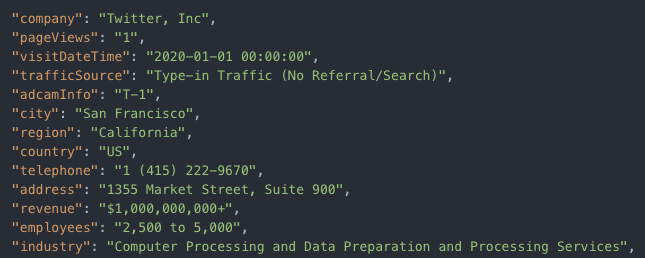
No, not Jason from 3B who blasts EDM on weeknights. JSON (JavaScript Object Notation) is a lightweight data format that APIs use to send and receive information. It’s clean, readable, and looks something like this:
{
“company”: “Twitter Inc.”,
“zip_code”: “95108”,
“pageviews”: 1
}
Each line here is a key-value pair, which you can read as simple Q&A:
"company"→ “What company is this?” →"Twitter Inc.""zip_code"→ “What’s the zip code?” →"95108""pageviews"→ “How many pages did they view?” →"1"
This format makes it easy for developers (and machines) to understand what data’s being requested — and what’s being returned.
Why APIs Matter
APIs are foundational to how the internet works today. Without them, every app would have to build every feature from scratch — location tracking, messaging, payments, social logins, and more.
Instead, developers use APIs to:
- Tap into powerful services without building them from the ground up
- Reduce time, cost, and effort
- Focus on what makes their product unique
Combine that with JSON’s simplicity, and you get a smooth, standardized way to plug tools into each other.
In Short…
APIs = the waiters of the internet.
JSON = the menu everyone understands.
Together, they power everything from small web apps to billion-user platforms — and make the digital world feel a whole lot more connected.
Ready to Build Smarter?
Foundry helps you harness APIs and real-time data to fuel better decisions and seamless integrations.